TL;DR
- How long alimony lasts depends mostly on how long the marriage lasted, and on which state’s law applies.
- States set the term four ways: a percentage of the marriage, a hard cap tied to marriage length, a rule that support can’t outlast the marriage, or the judge’s discretion.
- The same 12-year marriage can mean about 2 years of support in New York or up to about 8 years in Massachusetts.
- Death and the recipient’s remarriage end alimony almost everywhere. Some states also end or cut it for cohabitation or the payer’s retirement.
- Statutes change. Confirm the current rule in your state before you rely on any table.
A client asks how long the support will last. If you work in more than one state, the honest answer starts with “which state?”
The internet’s favorite answer is “half the length of the marriage.” That rule of thumb shows up in forum threads all the time. It’s roughly right in California for a short marriage. It’s wrong in most other places. Texas caps a 15-year marriage at five years. Massachusetts can allow more than ten.
This guide sorts the states into the four models they use, puts nine states side by side, and runs one 12-year marriage through all nine. Every rule is quoted from the statute or the state court’s own site. Guideline terms are caps or starting points, judges can depart with written findings, and laws change, so confirm the current rule before you file.

How Long Does Alimony Last?
Alimony usually lasts for a set number of months or years tied to the length of the marriage. Long marriages, often 20 years or more, can support an indefinite award that runs until death, remarriage, or a court order ends it. The exact limits come from each state’s statute.
Durational vs. indefinite alimony: Durational alimony ends on a set date, often calculated as a share of the marriage’s length. Indefinite alimony (sometimes called permanent alimony) has no end date and continues until a triggering event, such as death or remarriage, or a court modifies it.
Most of the fight over duration comes down to two numbers: the length of the marriage, and where your state draws the line between a “short” and a “long” one. How a court sets the amount is a separate question, covered in our guide to what alimony is based on.
The Four Ways States Set the Length of Alimony
States use four basic models to set how long alimony lasts. Some states mix two of them, such as a formula for shorter marriages and judicial discretion for long ones.
1. A percentage of the marriage’s length
These states multiply the length of the marriage by a set percentage. The percentage climbs as the marriage gets longer.
- Illinois multiplies the length of the marriage by a factor that starts at .20 for marriages under five years and rises to .80 for marriages of 19 to 20 years (750 ILCS 5/504).
- Colorado publishes a month-by-month table for marriages of three to 20 years. A five-year (60-month) marriage maps to a 21-month term (C.R.S. 14-10-114).
- New York gives an advisory range: 15% to 30% of the marriage’s length for marriages up to 15 years, 30% to 40% for 15 to 20 years, and 35% to 50% beyond 20 years (DRL § 236).
- Massachusetts caps general term alimony at 50%, 60%, 70%, or 80% of the marriage’s months, depending on whether the marriage lasted up to 5, 10, 15, or 20 years (M.G.L. c. 208, § 49).
- Florida caps durational alimony at 50% of a short marriage, 60% of a moderate one, and 75% of a long one (F.S. 61.08).
2. A hard cap tied to marriage length
Texas uses fixed ceilings instead of percentages. Court-ordered maintenance can’t run longer than five years after a 10- to 20-year marriage, seven years after a 20- to 30-year marriage, or 10 years after a marriage of 30 years or more (TexasLawHelp). The exception is a spouse who can’t meet basic needs because of a disability or because they care for a disabled child.
3. No longer than the marriage
Some states don’t set a percentage. They simply say alimony can’t outlast the marriage.
- New Jersey: for a marriage under 20 years, total alimony “shall not, except in exceptional circumstances, exceed the length of the marriage” (N.J.S.A. 2A:34-23).
- Utah: the court may not order alimony for longer than the marriage lasted, unless it finds extenuating circumstances or good cause (Utah Code 81-4-502).
4. The judge’s discretion, especially for long marriages
Long marriages are where formulas usually stop. California is the clearest example. For a marriage under 10 years, support generally lasts half the length of the marriage. For a marriage over 10 years, the California Courts self-help guide says there’s “no assumption about what’s reasonable,” and support may last as long as one spouse needs it and the other can pay.
Colorado, Illinois, and Massachusetts take a similar turn after 20 years. Each lets the court order support for an indefinite term once the marriage passes that mark.
Alimony Duration by State
The table below covers nine states and how each sets the term. It shows the general rule only. Each statute has exceptions, and judges can deviate with written findings.
| State | Model | How long alimony can last |
|---|---|---|
| California | Discretion | Under 10 years: generally half the marriage. Over 10 years: no presumption; can last as long as need and ability to pay continue |
| Colorado | Percentage table (advisory) | Marriages of 3–20 years: term from the statutory table (e.g., 60 months → 21; 120 → 54; 240 → 120). Over 20 years: set term or indefinite |
| Florida | Type-based caps | Bridge-the-gap up to 2 years; rehabilitative up to 5 years; durational up to 50% / 60% / 75% of the marriage for short / moderate / long marriages |
| Illinois | Multiplier | Marriage length × .20 to .80, based on years married. 20+ years: equal to the marriage or indefinite |
| Massachusetts | Percentage cap | General term: 50% (≤5 yrs), 60% (≤10), 70% (≤15), 80% (≤20) of months married. Over 20 years: indefinite allowed |
| New Jersey | Marriage-length ceiling | Under 20 years: total duration can’t exceed the length of the marriage, except in exceptional circumstances |
| New York | Advisory range | 15–30% (≤15 yrs), 30–40% (15–20 yrs), 35–50% (20+ yrs) of the marriage’s length |
| Texas | Hard cap | 5 years (10–20 yr marriage), 7 years (20–30), 10 years (30+) |
| Utah | Marriage-length ceiling | No longer than the marriage, unless extenuating circumstances or good cause |
Key Insight: Florida’s statute now lists only temporary, bridge-the-gap, rehabilitative, and durational alimony, and it applies to cases pending or filed on or after July 1, 2023. If your Florida file still talks about “permanent alimony” for a new case, it’s out of date.
Statutes in this area get amended often. Florida’s overhaul took effect July 1, 2023, and Utah moved its alimony rules into a new code title in 2024. Check the current code before you rely on any number here.
One 12-Year Marriage, Nine Different Answers
To see how far apart the states land, take one 12-year (144-month) marriage and run it through each state’s rule. These are the maximums or guideline terms the statutes produce, not predictions for any real case.
| State | How the rule applies to 144 months | Result |
|---|---|---|
| New York | 15% to 30% of 144 months | About 1.8 to 3.6 years |
| Texas | 10–20 year marriage cap | Up to 5 years |
| Colorado | Statutory table at 144 months | 71 months (about 5.9 years) |
| Illinois | 144 months × .52 (12 to 13 years married) | About 74.9 months (6.2 years) |
| Florida | Durational cap, moderate-term marriage (60%) | Up to about 7.2 years |
| Massachusetts | General term cap, 10–15 year marriage (70%) | Up to about 8.4 years |
| New Jersey | Can’t exceed the marriage | Up to 12 years |
| Utah | Can’t exceed the marriage | Up to 12 years |
| California | Over 10 years, no presumption | No set end date |
That’s a spread from under two years to no fixed end date, for the same couple. It’s also why “half the marriage” is a poor shortcut. Of these nine states, only California uses a half-the-marriage rule, and only for marriages under 10 years.
For a CDFA® professional, this table is where planning starts. A five-year stream and an eight-year stream change what a fair property split looks like, and they change what a lump-sum buyout is worth. That modeling is part of the CDFA® financial planning process.
SecureSplit® helps financial professionals model support and property outcomes for the same case side by side. See how SecureSplit® works for financial professionals.
What Ends Alimony Early?
Alimony usually ends early when either spouse dies or the recipient remarries. Several states also end, suspend, or reduce it when the recipient lives with a new partner or the payer reaches retirement age.
- Death or remarriage. California, Massachusetts, New York, and Florida all end alimony on death, and on the recipient’s remarriage. In Florida, that applies to bridge-the-gap and durational alimony.
- Cohabitation. In Massachusetts, a recipient who lives with a partner for at least three months can see alimony reduced, suspended, or ended. In Utah, the court must end alimony once the payer proves the former spouse is cohabiting, as long as the payer asks within one year of learning about it (Utah Code 81-4-505).
- Retirement. Massachusetts general term alimony ends when the payer reaches full retirement age, unless the judge orders otherwise. In Utah, a party’s retirement is a substantial material change that supports a petition to modify, for decrees entered on or after May 12, 2020, unless the decree says otherwise (Utah Code 81-4-504).
Watch Out: None of these events ends a court order on its own in every state. Some require the payer to file and prove the change. Tell clients not to stop paying until there’s an order or an agreement in writing.
Settlement Agreements and Temporary Support
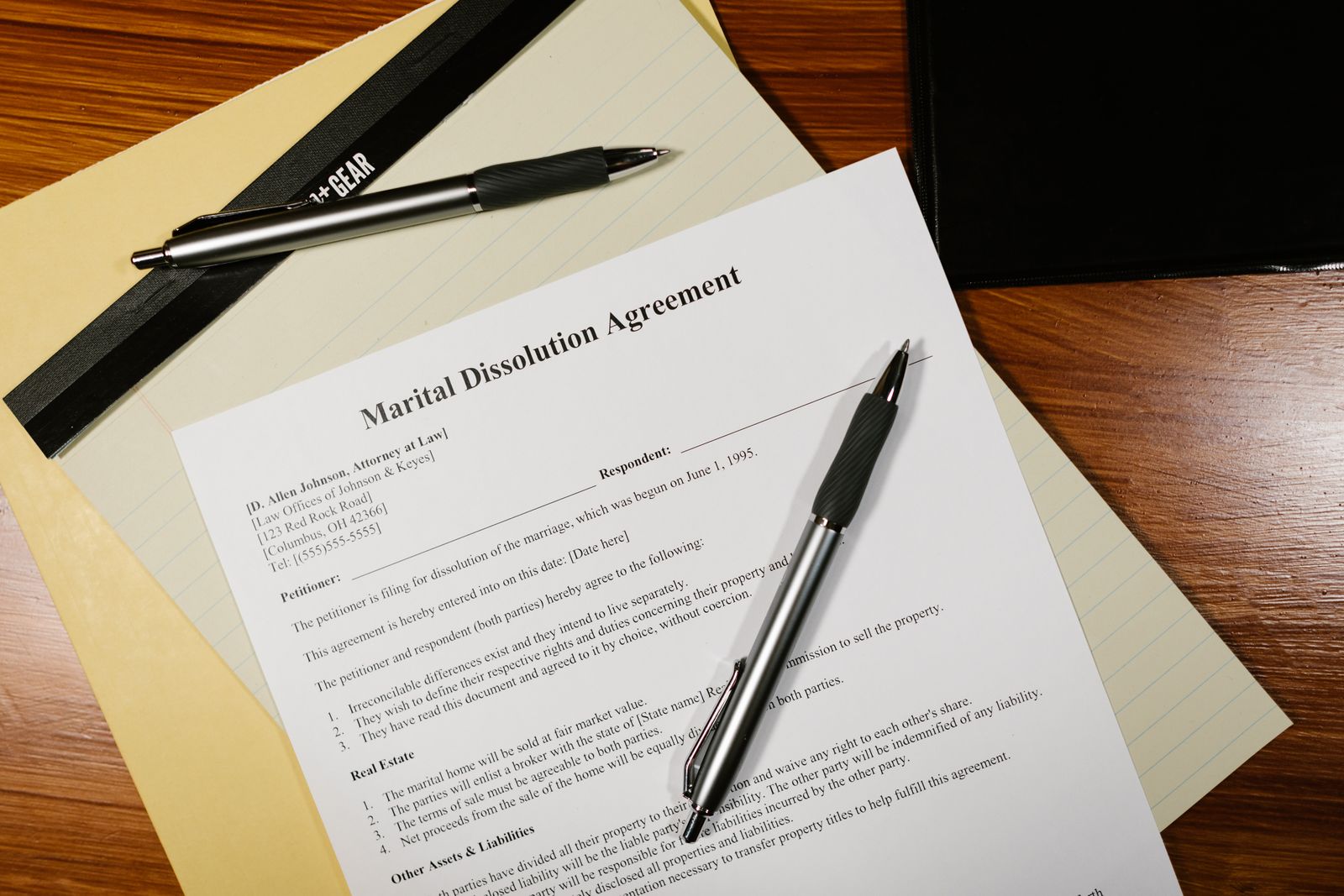
Most couples settle, and a settlement agreement can set its own alimony term. The statutory limits matter most as the reference point both sides negotiate around. Running the numbers before the meeting makes those talks shorter, which is what modeling settlement options is for.
Temporary alimony paid while the case is open can also count. Utah counts temporary alimony toward the total time allowed. Illinois lets the court credit temporary maintenance against the guideline term.
Pro Tip: Track the start date of temporary support in the case file. In states that credit it, months already paid come off the final term, and that changes the present value of the award.
Where SecureSplit® Fits
Duration is only half of a support number. The other half is what the payments are worth against the property split and each spouse’s cash flow over the full term. SecureSplit® puts support calculations, property division, and court-ready reports in one file, so a CDFA® professional can compare a five-year term with an eight-year term without rebuilding the case. Attorneys can see how it works for family law attorneys, and financial professionals here.
Frequently Asked Questions
Is alimony forever?
Rarely. Most states tie alimony to the length of the marriage and end it on death or the recipient’s remarriage. Indefinite awards are generally reserved for long marriages, such as those over 20 years in Colorado, Illinois, and Massachusetts, or over 10 years in California when need and ability to pay continue.
Does 10 years of marriage mean lifetime alimony?
No. In California, a marriage over 10 years removes the presumption that support lasts half the marriage, but it doesn’t guarantee lifetime support. In Texas, a 10- to 20-year marriage caps court-ordered maintenance at five years.
Does alimony end when you retire?
In some states. Massachusetts general term alimony ends when the payer reaches full retirement age unless the judge orders otherwise. In other states, retirement may support a request to modify rather than ending support automatically. Check the statute and the order’s own terms.
Does alimony stop if my ex lives with someone?
It can. In Massachusetts, living with a partner for at least three months can lead to alimony being reduced, suspended, or ended. Utah requires the court to end alimony once the payer proves cohabitation. Many states require the payer to go back to court to prove it.
Does temporary alimony count toward the total term?
Sometimes. Utah counts temporary alimony toward the time allowed, and Illinois lets the court credit temporary maintenance against the guideline duration. Other states treat temporary support separately, so check the local rule.
Can alimony last longer than the marriage?
Usually not, outside of long marriages. New Jersey (for marriages under 20 years) and Utah both bar alimony longer than the marriage, except in exceptional or extenuating circumstances. States that allow indefinite awards for long marriages are the main exception.
Plan Around the Term, Not Just the Amount
How long alimony lasts can matter as much as the monthly amount. Nine states can give nine answers for the same marriage. A good settlement starts with knowing which rule applies and what each possible term is worth.
SecureSplit® gives CDFA® professionals and financial advisors one place to model support and property outcomes side by side. See how SecureSplit® works for financial professionals.